
If you are a MBA student like I am, you must be wondering why you should pay attention to this emerging technology. My view on the economic benefit of cloud computing is that even though it is in its nascent stage, it is bound to grow enormously because of its potential as a cost reducer. Even though some companies are still reluctant to adopt this technology, they will be compelled to shift to cloud to sustain competition from the early adopters. As future business professionals, we need to take a deep look at the technology because in future we might work for a firm that is a provider of cloud computing or our firm might be a user of cloud computing. We would also need to know how our firm can leverage this technology to reduce cost or to gain other competitive advantages.
In this post I will discuss the growth prospect of the cloud computing industry, how cloud computing can release resources for user companies that can be used for new innovations, how cloud computing will be adopted by other industries and how all these factors in combination can lead to creation of millions of new jobs.
While the current market size of the cloud market is approximately $40.7 billion, the research firm Forrester predicts the global cloud market to reach $241 billion by 2020. Summary of the Forrester report can be found in http://www.simplysecurity.com/2011/04/29/forrester-cloud-market-to-hit-240-billion-by-2020/ and http://blogs.wsj.com/digits/2011/04/21/more-predictions-on-the-huge-growth-of-cloud-computing/.

According to Forrester, SaaS market will experience the most rapid growth and will reach $132 billion by 2020 from its current size of $21.2 billion. PaaS market is projected to grow to $11.9 billion in 2020 from its current size of $820 million. Forrester expects IaaS market to follow a bell shaped growth curve. It will reach $5.7 billion in 2017 from its current size of $2.7 billion. But after 2017, it will show a downward growth.
Gartner's growth projection is as follows (http://spectrum.ieee.org/computing/software/taiwan-sees-clouds-in-its-forecast):

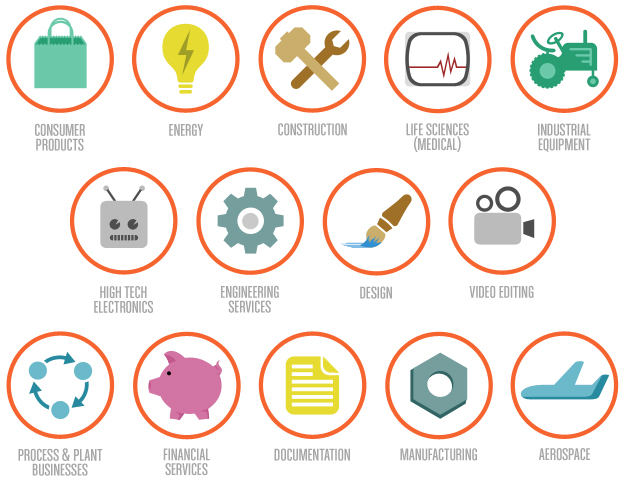
The projected growth of the cloud computing market indicates the current wide adoption and intended future adoption of the technology by various industry sectors. As I discussed in my previous post, cloud computing essentially enables companies to reduce their information and communication technology (ICT) costs and thus renders a competitive advantage. If a few companies in a particular sector adopt this technology, others would be compelled to use cloud computing to compete efficiently. A report by John-Scott Dixon in Cloud Magazine (http://thecloudmagazine.com/cloud-computing-industry-analysis-article/) points out 14 industries that will benefit immensely by adopting cloud computing. Those industries (http://thecloudmagazine.com/cloud-computing-industry-analysis-article/) are:

The likely outcome of such adoption would lead to substantial cost reduction for these companies and in turn would release resources that can be used for new innovations. Business News Daily (http://www.businessnewsdaily.com/2190-cloud-computing-jobs-generator.html) predicts that cloud computing can reduce expenditure of companies in the U.S.A by $625 billion over next five years. The released resource can be used for investment for new activities and that in turn would lead to job creation. Here is a video that shows experts' opinion on cost reduction abilities of cloud computing:
I will end this post with a discussion of projected job growth in cloud computing sector and prospect of job creation in sectors that will adopt cloud computing. IDC projects (http://www.microsoft.com/presspass/download/features/2012/IDC_Cloud_jobs_White_Paper.pdf) the following job growth rate:

In the same report, IDC also predicts that by 2015, businesses worldwide can realize revenue of $1.1 trillion from the IT innovation enabled by cloud and more than 50% of the 13.8 million jobs would be created by small and medium size businesses in banking, communications and discrete manufacturing industries. Following chart shows cloud jobs by size class:

IDC expects Security and Investment industry to be the earliest cloud adopters while Healthcare to adopt cloud slower than the average. Following chart depicts the projected IT spending of various industries in the future:

Most of the experts believe that majority of job creation will take place in the emerging markets especially in China and India. Cloud Tweaks reports (http://www.cloudtweaks.com/2012/03/cloud-infographic-cloud-computings-role-in-job-creation/) that India will see a 98% growth in cloud related jobs and China, India and Indonesia together will add more than 7 million cloud related jobs by the year 2015.
This post intends to draw your attention to the micro and macro economic benefit of cloud computing that are extremely relevant to MBA students, business professional and business owners. I certainly do not mean that cloud computing does not have any disadvantages and that you should not weigh your options before adopting this technology. In my next post I will discuss the criticism against cloud computing and current status of cloud computing.
In this post I will discuss the growth prospect of the cloud computing industry, how cloud computing can release resources for user companies that can be used for new innovations, how cloud computing will be adopted by other industries and how all these factors in combination can lead to creation of millions of new jobs.
While the current market size of the cloud market is approximately $40.7 billion, the research firm Forrester predicts the global cloud market to reach $241 billion by 2020. Summary of the Forrester report can be found in http://www.simplysecurity.com/2011/04/29/forrester-cloud-market-to-hit-240-billion-by-2020/ and http://blogs.wsj.com/digits/2011/04/21/more-predictions-on-the-huge-growth-of-cloud-computing/.

According to Forrester, SaaS market will experience the most rapid growth and will reach $132 billion by 2020 from its current size of $21.2 billion. PaaS market is projected to grow to $11.9 billion in 2020 from its current size of $820 million. Forrester expects IaaS market to follow a bell shaped growth curve. It will reach $5.7 billion in 2017 from its current size of $2.7 billion. But after 2017, it will show a downward growth.
Gartner's growth projection is as follows (http://spectrum.ieee.org/computing/software/taiwan-sees-clouds-in-its-forecast):

The projected growth of the cloud computing market indicates the current wide adoption and intended future adoption of the technology by various industry sectors. As I discussed in my previous post, cloud computing essentially enables companies to reduce their information and communication technology (ICT) costs and thus renders a competitive advantage. If a few companies in a particular sector adopt this technology, others would be compelled to use cloud computing to compete efficiently. A report by John-Scott Dixon in Cloud Magazine (http://thecloudmagazine.com/cloud-computing-industry-analysis-article/) points out 14 industries that will benefit immensely by adopting cloud computing. Those industries (http://thecloudmagazine.com/cloud-computing-industry-analysis-article/) are:
The likely outcome of such adoption would lead to substantial cost reduction for these companies and in turn would release resources that can be used for new innovations. Business News Daily (http://www.businessnewsdaily.com/2190-cloud-computing-jobs-generator.html) predicts that cloud computing can reduce expenditure of companies in the U.S.A by $625 billion over next five years. The released resource can be used for investment for new activities and that in turn would lead to job creation. Here is a video that shows experts' opinion on cost reduction abilities of cloud computing:
I will end this post with a discussion of projected job growth in cloud computing sector and prospect of job creation in sectors that will adopt cloud computing. IDC projects (http://www.microsoft.com/presspass/download/features/2012/IDC_Cloud_jobs_White_Paper.pdf) the following job growth rate:

In the same report, IDC also predicts that by 2015, businesses worldwide can realize revenue of $1.1 trillion from the IT innovation enabled by cloud and more than 50% of the 13.8 million jobs would be created by small and medium size businesses in banking, communications and discrete manufacturing industries. Following chart shows cloud jobs by size class:

IDC expects Security and Investment industry to be the earliest cloud adopters while Healthcare to adopt cloud slower than the average. Following chart depicts the projected IT spending of various industries in the future:

Most of the experts believe that majority of job creation will take place in the emerging markets especially in China and India. Cloud Tweaks reports (http://www.cloudtweaks.com/2012/03/cloud-infographic-cloud-computings-role-in-job-creation/) that India will see a 98% growth in cloud related jobs and China, India and Indonesia together will add more than 7 million cloud related jobs by the year 2015.
This post intends to draw your attention to the micro and macro economic benefit of cloud computing that are extremely relevant to MBA students, business professional and business owners. I certainly do not mean that cloud computing does not have any disadvantages and that you should not weigh your options before adopting this technology. In my next post I will discuss the criticism against cloud computing and current status of cloud computing.


